
Key Takeaways:
- Deep audience research and advanced targeting are the foundation of high-performing social media lead generation campaigns.
- Choosing the right platforms and aligning content with user behavior significantly improves lead quality and ROI.
- Compelling ad creative, optimized landing pages, and strategic retargeting work together to boost conversions.
- Continuous performance analysis and smart budget allocation are essential for scaling results and sustaining long-term growth.
Understanding Your Target Audience
Building a successful lead generation campaign on social media begins with a deep understanding of your target audience. This process goes far beyond superficial data points; it requires careful research into customer needs, pain points, preferences, and online behaviors. Pinpoint vital demographic characteristics, interests, and digital habits to help shape your creative and media plan. Tools such as customer surveys, website analytics, social listening applications, third-party audience insights, and CRM data enable marketers to collect nuanced information, enabling more precise campaign targeting. This foundational layer is essential, as even the most visually engaging or cleverly written ads will fall flat if shown to an audience that simply isn’t interested. Leveraging advanced digital marketing audience targeting methodologies like predictive modeling, AI-driven personalization, and lookalike audience tools ensures that every advertising dollar is spent reaching those most receptive to your message, thereby amplifying campaign ROI and reducing wasted spend.
Your insights into your audience should inform every decision you make, from crafting your creative messaging and selecting ad formats to the bidding strategies you employ. Use every available data point, such as engagement rates, past interaction patterns, purchase history, or custom affinity groups, to make your campaigns increasingly personalized. This can mean customizing content by user segment, timing your promotions to when your audience is most active, and tailoring offers to reflect each group’s unique stage in the buyer journey and level of purchase intent. Strategic personalization helps ensure your ads stand out in the crowded, fast-scrolling environment of social feeds and facilitates a deeper connection with users who are already exhibiting buying signals, increasing your chances of capturing high-quality leads and driving sustainable growth.
Choosing the Right Platforms
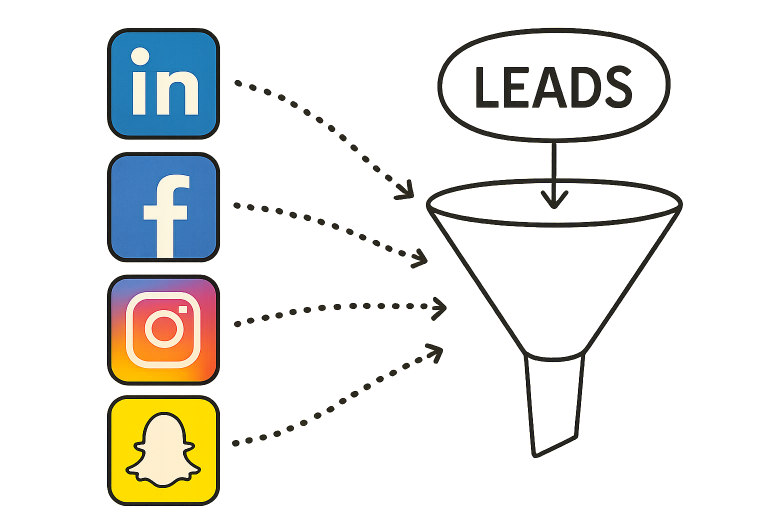
The foundations of lead generation success are shaped not only by your content quality but also by your strategic selection of social media platforms. LinkedIn tends to be an optimal choice for B2B marketers thanks to its professional user base and granular targeting filters, enabling campaigns to reach exact job titles, industries, and seniority levels. Meanwhile, Facebook and Instagram often deliver excellent returns for B2C brands and retail-focused efforts, as their algorithms and robust interest-based targeting allow you to reach large audiences with precision. Platforms known for their younger user bases and interactive, creative formats offer unique opportunities for brands aiming to reach Gen Z or Millennials with video-driven, playful lead-generation tactics. Wise platform selection ensures competitiveness, maximizes impact, and directly influences how you deploy creative assets, tailor your messaging, and define your calls to action.
To continually drive improvements, prioritize ongoing data-driven digital marketing optimization. Regularly review analytics and compare cost, engagement, and actual conversion metrics across platforms, adjusting your focus based on where your leads are truly originating, not just where you get the most impressions or clicks. Employ cross-channel attribution models to understand the multi-touch journey users take before converting, and leverage those insights to optimize your creative distribution, budget allocations, and overall strategic planning.
Crafting Compelling Ad Content
Quality ad content is central to motivating users to take meaningful action, whether it’s filling out a form, signing up for a newsletter, or requesting more information about your services. Every ad should combine captivating visuals, clear and concise messaging, and an irresistible call to action. To stand out, ensure your image or video assets not only look professional but also highlight your value proposition and make the next step obvious. Use bold color schemes, purposeful layouts, and eye-catching graphics to draw viewers’ attention directly to your CTA. Experiment with A/B testing different headlines, images, button placements, and messaging angles to see what resonates best with your target audience. The key is to ensure that within seconds, users can understand exactly what advantage or benefit they will receive and why they should trust your brand over competitors, so their motivation to engage or submit their information is as high as possible.
Seeking inspiration from industry leaders and proven campaigns can help keep your creative strategies sharp. Study case studies and success stories from major digital marketing authorities, which frequently feature high-performing ad creatives that have driven significant lead volumes or engagement spikes. Maintaining a swipe file of proven ad designs, headlines, and offers will help your creative team iterate faster and stay up to date with leading trends in ad design, copywriting, and interactivity. Regular reviews and adaptations ensure your content remains fresh, on-brand, and ahead of the competition.
Implementing Advanced Targeting Options
Beyond standard demographic and interest targeting, advanced audience segmentation and targeting tactics deliver precision lead capture. Utilize features such as lookalike audiences, retargeting pools, and account-based marketing tools to hone in on the users most likely to convert. For instance, a B2B software company running LinkedIn Ads can use highly specific filters to reach only those at a certain seniority level, within select industries, or at particular companies. Using LinkedIn’s company size and job function filters, for example, dramatically improves message-match and relevance. These advanced targeting capabilities enable you to craft offers that address the real-world needs of your intended decision-makers, resulting in higher engagement, more qualified leads, and better alignment between customer pain points and your solution. Leveraging these tools is critical in competitive sectors, helping businesses quickly move prospects through the pipeline while optimizing spend.
Optimizing Landing Pages
Your landing page serves as the all-important bridge between a prospect clicking your ad and becoming a qualified lead. Every aspect must be meticulously optimized to reduce friction and drive conversions from the headline and supporting copy to CTA placement and form design. Use a single, focused headline that reassures visitors they are in the right place, followed by persuasive and often concise, benefit-driven statements that reinforce your ad’s offer. Prioritize short forms that ask only for necessary details; long or confusing fields risk losing visitors before they convert. Regularly test incremental changes, such as swapping out button colors for higher visibility, editing copy for clarity, adding testimonial modules to boost credibility, or embedding explainer videos and interactive demos. Markers of trust, such as security badges, privacy notices, and the prominent display of client logos, also reduce hesitation and bolster conversion rates.
Utilizing Retargeting Strategies
Retargeting is an indispensable component of a comprehensive paid social lead-generation strategy. Not all prospects convert on first contact; many need time or extra reassurance before making a decision. Pixel-based retargeting lets you show ads to users who have already interacted with your content, visited your site, or started a form but abandoned it. Meanwhile, list-based retargeting enables you to upload CRM lists to social platforms (where allowed) and send tailored messages to users who match those records. By using retargeting to refresh your audience’s memory and provide new incentives such as limited-time discounts, free resource downloads, or invitations to consultations, you significantly improve your conversion rates while helping prospects feel nurtured rather than pressured. Sophisticated sequencing lets each follow-up message build upon the last, gradually overcoming objections and leading users toward conversion, all while making efficient use of your budget and minimizing wasted impressions.
Monitoring and Analyzing Performance
Continuous monitoring and deep analysis are keys to sustained campaign improvements. Don’t just glance at impressions, focus on deeper metrics like click-through rates (CTR), cost per lead (CPL), and actual lead conversion rates to identify both winning tactics and areas needing refinement. Go beyond surface-level indicators like likes and basic clicks to understand which combinations of creative messaging, audience targeting, and offers drive tangible business outcomes. Most social platforms provide built-in analytics dashboards, but integrating these metrics into your CRM or a third-party analytics platform unlocks a holistic, cross-channel view of your true ROI. Consult resources for step-by-step guides on interpreting KPIs and establishing actionable dashboards so campaign insights translate swiftly into improved tactics and investments. The more rigorously you analyze and iterate, the more efficiently you scale and improve your paid social programs.
Allocating Budget Effectively
Successful lead generation campaigns are grounded in effective resource allocation. Set a clear, realistic budget aligned with your broader business objectives and the value of a converted lead in your pipeline. Treat your budget as a dynamic component that regularly adjusts based on live performance data, market seasonality, and shifting priorities. Experiment with cost-per-click (CPC), cost-per-impression (CPM), or even cost-per-lead models, shifting resources toward the audience, creative combinations, and platforms that deliver maximum conversions at the lowest cost. Don’t forget to factor in external events, seasonal changes, or upcoming product launches when allocating spend; timing can often have as significant an impact as the total dollar amount. Consistent evaluation ensures dollars flow toward the highest ROI activities, and rapid reallocation away from underperforming ad sets can mean the difference between mediocre results and breakout growth.
Final Thoughts
Implementing these best practices equips you to maximize the efficiency and impact of your paid social lead generation campaigns. By leveraging ongoing testing, learning, and adaptation across targeting, creative, analytics, and budget, you’ll ensure a steady flow of qualified leads and lay the groundwork for ongoing business growth. Staying ahead of evolving trends in social platforms, algorithm updates, and consumer preferences offers you a sustainable competitive advantage in the increasingly complex digital marketing landscape. With constant experimentation and attention to data, your campaigns will not only scale up lead volume but also propel stronger, longer-term business results.