
Key Takeaways
- Innovative parking solutions reduce congestion, emissions, and stress.
- Automated and smart systems optimize space, security, and efficiency.
- Green initiatives and de-paving improve sustainability and urban resilience.
- Mobile apps and dynamic allocation simplify parking and save time.
- Suburban incentives ease downtown traffic and promote public transit.
Urban centers face mounting pressures as vehicle ownership rises and parking spaces shrink. From navigating dense city streets to finding reliable parking spaces, motorists and city planners alike are seeking viable solutions. Among the most effective innovations are smart infrastructure and advanced automation, such as an advanced garage park assist system for multi-level parking structures. These tools optimize space utilization and streamline the driver experience, making urban environments more efficient and sustainable.
The urgency for these solutions is underscored by worsening congestion and environmental stress in cities. Traditional parking methods fall short in addressing space scarcity, security concerns, and negative environmental impacts. As cities expand, implementing new technologies and strategies is essential to balancing mobility with quality of life. Proactive measures help reduce the carbon footprint, limit traffic bottlenecks, and improve urban livability. Meeting these challenges requires both technological advances and thoughtful integration into urban planning.
Parking innovations not only benefit drivers by saving time but also play a vital role in public safety and environmental sustainability. By embracing forward-looking ideas, city planners can address evolving transportation demands and make city centers more accessible. As new solutions become more widely adopted, urban residents and visitors will experience a shift toward more convenient and less stressful mobility.
Automated Parking Systems
Automated Parking Systems (APS) use robotics and automation to vertically stack, park, and retrieve vehicles, dramatically increasing space utilization. By limiting human involvement, these systems enhance both security and operational efficiency. Automated technology eliminates the challenges of navigating tight garage spaces and reduces the risk of accidents or damage. Cities such as Tokyo and New York have pioneered this approach to transform how urban parking demands are met, demonstrating how robotics can redefine what is possible.
Smart Parking Technologies
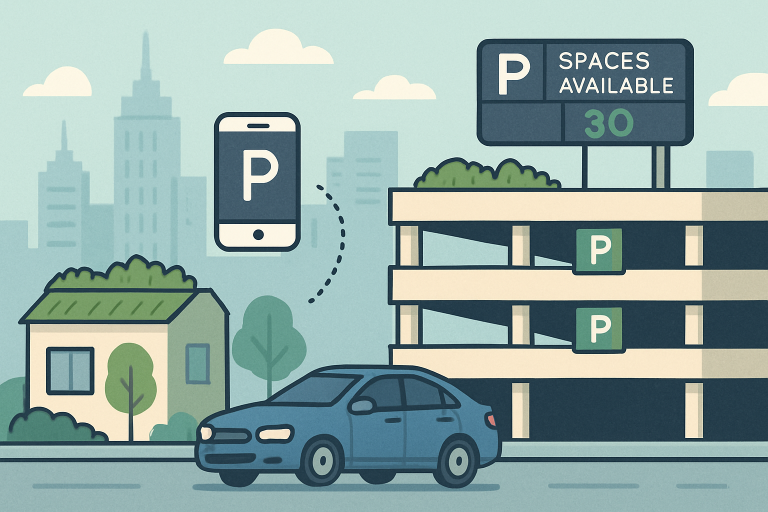
Smart parking technologies integrate Internet of Things (IoT) sensors, data analytics, and mobile interfaces to bring real-time intelligence to everyday parking challenges. These systems detect available spaces, analyze parking patterns, and direct drivers efficiently via apps or digital signage. The city of Trikala in Greece is a noteworthy example, having introduced a smart parking system allowing drivers to locate, reserve, and pay for spaces from their smartphones. This not only reduces traffic congestion but also curbs emissions caused by circling vehicles. Such innovations make urban travel smoother while reducing the stress and unpredictability of finding a spot.
Green Parking Initiatives
Environmental responsibility is gaining ground as cities strive to lessen the ecological footprint of parking areas. Green parking initiatives include the construction of underground garages that benefit from natural insulation, reducing energy needs, and green roof parking, where vegetation is planted atop structures to limit heat absorption and manage rainwater runoff. Implementing underground facilities can decrease energy consumption by nearly 40% compared to above-ground alternatives, while green roofs can reduce urban heat by up to 30%. These eco-friendly solutions foster not just sustainability but also the beautification of urban spaces.
Dynamic Parking Space Allocation
Dynamic parking allocation leverages real-time data and artificial intelligence to adapt on-street parking availability according to flux in urban demand. By reallocating parking spaces to match demand, cities can significantly reduce traffic congestion, ensuring smoother flow for everyone. Advanced algorithms analyze traffic patterns and usage to adjust space distribution on the fly. Research shows that using multi-agent reinforcement learning in these systems can lead to marked reductions in the average time drivers spend searching for parking, making this a promising method for transforming urban mobility.
Mobile Applications for Parking
In the age of smartphones, mobile applications have revolutionized the parking experience through reservation-based systems that guarantee a reserved spot, adding peace of mind for drivers. These apps offer pre-booking, real-time navigation, and secure payment options, thereby minimizing the risk of vehicle break-ins by up to 41%. Additionally, pay-by-phone systems eliminate the need for cash or a card at meters, letting users manage their parking remotely and efficiently. This shift makes parking more accessible and reduces daily frustrations for urban drivers. An example of such an application is the Novoville app, which has been implemented in various cities, including Trikala, Greece.
Incentivized Suburban Parking
Suburban parking strategies incentivize drivers to leave their cars outside urban cores and use public transit or park-and-ride systems. By implementing feedback control frameworks, cities can balance parking loads and ease downtown congestion. Offering lower prices or perks attracts more drivers to suburban lots and helps decrease both traffic density and air pollution in city centers. These approaches require collaboration between transit agencies and city planners but have proven successful in numerous metropolitan areas.
De-paving Urban Areas
De-paving is the replacement of impermeable surfaces, such as excess parking lots, with green space or permeable ground. This shift improves urban resilience by enhancing stormwater absorption and reducing the urban heat island effect. Leading cities like Portland, Oregon, have embraced de-paving by converting underutilized lots into community green spaces, transforming neighborhoods while also mitigating flood risks and lowering surface temperatures.
Final Thoughts
Urban parking issues demand inventive and adaptive thinking. Automated parking systems, smart parking technology, green initiatives, dynamic allocation, mobile apps, incentivized suburban solutions, and de-paving are all crucial in fostering cities that are navigable, sustainable, and equitable. Collaboration and continuous investment in these modern parking strategies can help metropolitan areas not only overcome current obstacles but also prepare for future transportation needs, ultimately contributing to safer, more livable urban environments for all.